
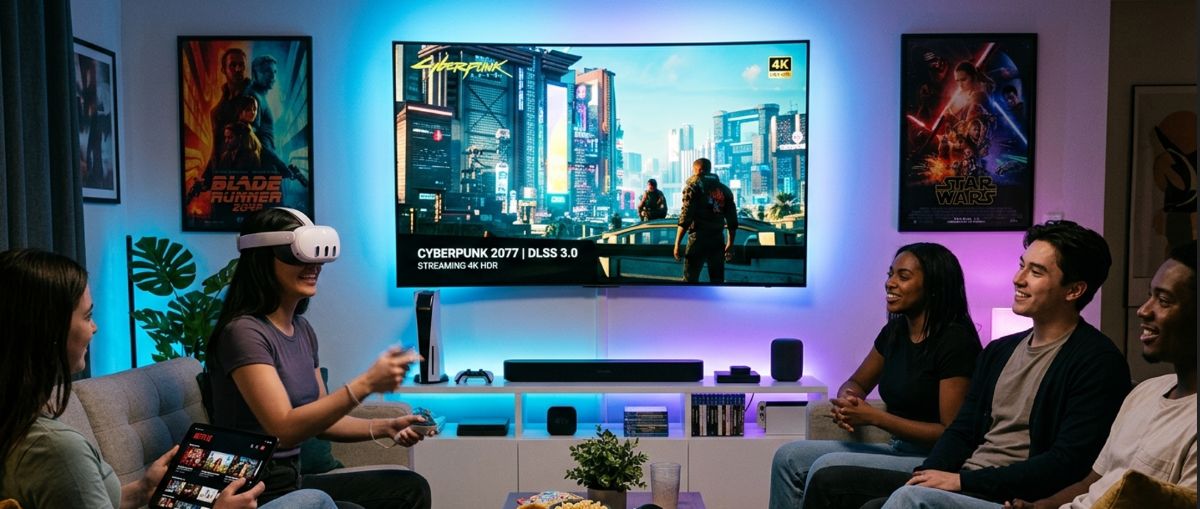
How Technology Is Transforming the Entertainment Industry
Entertainment has changed dramatically over the past decade. Watching television at a fixed time, buying DVDs, or waiting for music releases has largely been replaced by streaming platforms, personalised recommendations, and digital content available on demand. Technology has given audiences greater control over what they watch, listen to, and play.
The numbers reflect this shift. The global entertainment and media industry is expected to generate more than $3.5 trillion in revenue by 2029, while the global video streaming market is projected to exceed $430 billion by 2030. At the same time, artificial intelligence and virtual reality are creating new ways for people to experience films, music, and games.
Understanding how technology is changing entertainment helps explain why the industry continues to grow at such a rapid pace.
Streaming Services Have Changed How People Watch and Listen
The biggest change in entertainment has been the rise of streaming platforms. Instead of relying on television schedules or physical media, people can now watch films, TV shows, documentaries, and live events whenever they choose.
Music has followed the same trend. Streaming services provide instant access to millions of songs, personalised playlists, and podcasts, allowing listeners to discover new artists with ease. Streaming platforms also use artificial intelligence to recommend content based on viewing habits. These recommendations improve user experience while helping creators reach audiences who are most likely to enjoy their work.
Artificial Intelligence Is Supporting Film, Music, and Content Creation
Artificial intelligence is becoming an important tool across the entertainment industry. Production companies use AI to analyse audience preferences, improve visual effects, and assist with video editing.
In the music industry, AI helps artists compose melodies, remove background noise, and improve audio quality. Some creators also use AI tools to generate artwork, subtitles, and translations that make content accessible to wider audiences.
While AI speeds up production, creative decisions still rely on writers, musicians, directors, and designers. Rather than replacing creativity, AI is becoming a tool that supports it.
Understanding how technology is changing entertainment means recognising that AI is improving efficiency without replacing human imagination.
Social Media Has Given Content Creators a Global Audience
Social media has transformed how entertainment reaches audiences. Today, creators no longer need a television network or record label to build a following.
Platforms such as short-form video apps, live streaming services, and video-sharing websites allow musicians, comedians, gamers, and filmmakers to connect directly with millions of viewers.
Trending clips, viral challenges, and creator collaborations often influence music charts, television popularity, and even cinema attendance. In many cases, a viral social media post generates more attention than traditional advertising campaigns.
This direct connection between creators and audiences has made entertainment more interactive than ever before.
Virtual Reality Is Creating More Immersive Experiences
Virtual reality (VR) is opening new possibilities for entertainment by allowing users to experience digital environments rather than simply watching them.
VR is increasingly used for:
- Interactive gaming
- Virtual concerts
- Museum and exhibition tours
- Live sporting experiences
- Educational entertainment
As VR headsets become more affordable, experts expect immersive entertainment to become more common in households around the world. Although adoption is still growing, VR is changing how audiences experience stories by placing them at the centre of the action.
Emerging Technologies Will Shape the Next Generation of Entertainment
The future of entertainment will likely combine artificial intelligence, virtual reality, augmented reality, and faster internet connections.
AI will continue improving personalised recommendations, while cloud gaming will allow users to play high-quality games without expensive hardware. Augmented reality is expected to become more common in live events, sports broadcasts, and interactive experiences.
Creators will also have access to better production tools, making it easier for independent filmmakers, musicians, and digital artists to produce professional-quality content.
As these technologies develop, how technology is changing entertainment will continue to influence the way stories are created, shared, and enjoyed across the world.
Conclusion
Technology has completely reshaped the entertainment industry, giving audiences more choice, greater convenience, and increasingly personalised experiences. From streaming services and AI-powered production to social media and virtual reality, digital innovation continues to change how people consume content every day.
As new technologies emerge, the entertainment industry will keep evolving, creating exciting opportunities for both creators and audiences. Understanding how technology is changing entertainment allows us to appreciate the innovations shaping the future of digital media.
From entertainment news to the latest tech updates, Ehre productions keeps you informed about the stories shaping today’s digital world. You can contact us on 0203 006 3065 and visit us at The Light Bulb, Suite 213, 1 Filament Walk, London SW18 4GQ.