
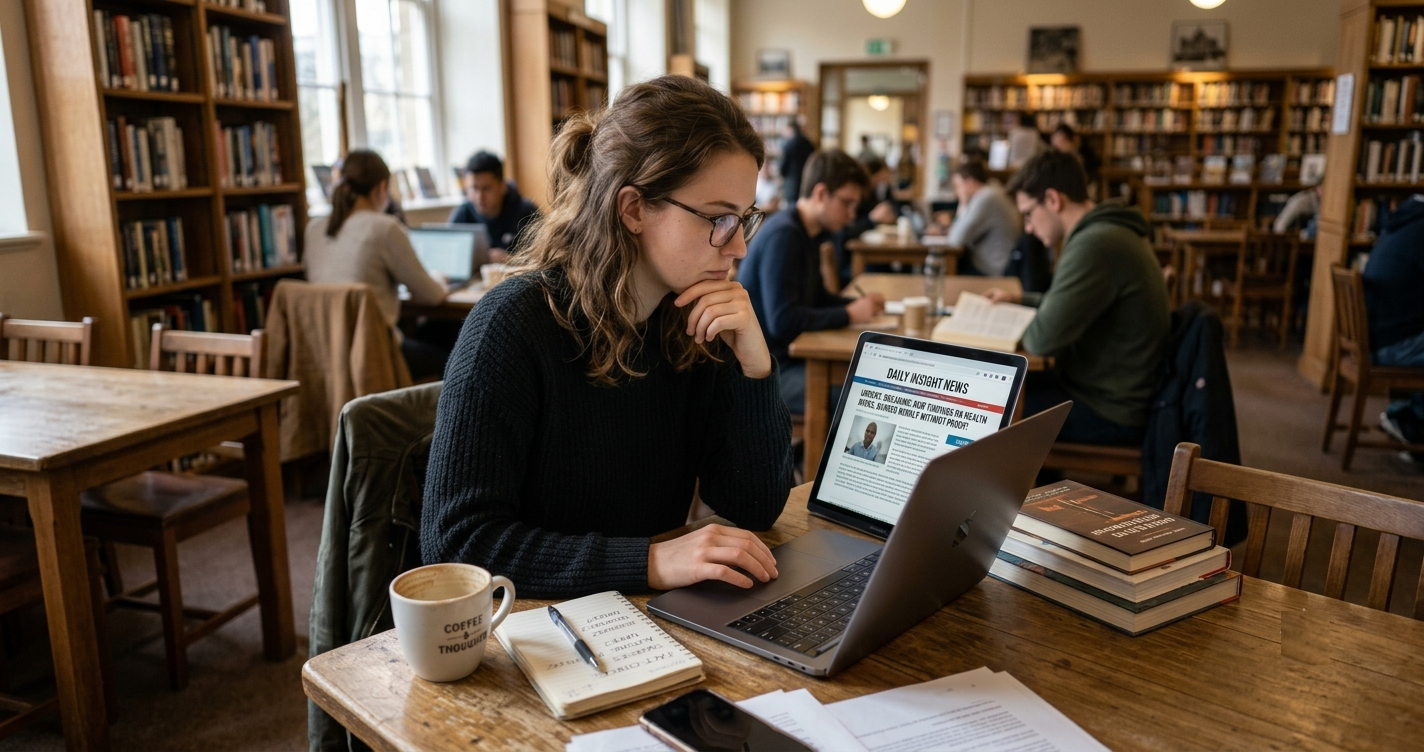
How to Spot Fake News Online Before You Share It
Every day, millions of people scroll through social media, messaging apps, and news websites looking for the latest updates. While access to information has never been easier, it has also become much easier for false or misleading stories to spread.
A sensational headline, an edited image, or a misleading post can reach thousands of people within minutes. Almost 50% of people globally encounter fake news or misleading information every day.
Learning how to spot fake news online is an essential digital skill. Taking a few moments to verify information before sharing it helps prevent misinformation from spreading and ensures that friends, family, and colleagues receive accurate information instead of rumours.
Read Beyond the Headline
One of the most common mistakes people make is sharing an article after reading only the headline. Misleading headlines are often designed to attract clicks by creating excitement, fear, or outrage.
Before forming an opinion, open the article and read it completely. Ask yourself:
- Does the headline accurately reflect the content?
- Are important details missing?
- Does the article provide evidence to support its claims?
Many viral posts rely on emotional headlines that exaggerate or distort the actual story. Reading the full article gives you the context needed to judge whether the information is credible.
Check the Original Source
A trustworthy article usually comes from a recognised news organisation, government agency, university, or established institution. If you’ve never heard of the website, spend a minute investigating it.
Look for:
- An “About Us” page
- Named authors with verifiable credentials
- Contact information
- Editorial policies
- References to official sources
Be cautious if the website publishes sensational stories without supporting evidence or if every article appears designed to provoke strong emotions. Reliable journalism values accuracy over clicks.
When learning how to spot fake news online, checking where the information originated is one of the most effective habits you can develop.
Look for Multiple Reliable Reports
Major news events are rarely reported by only one outlet. If a story is genuine, several reputable organisations are likely to cover it independently. Search for the same topic using trusted news websites. If multiple reliable sources report similar facts, the information is generally more dependable. If the story appears only on obscure blogs or anonymous social media accounts, treat it with caution.
Comparing reports also helps identify missing context, corrections, or updates that may not appear in the original post.
Be Careful with AI-Generated Images
Artificial intelligence has made it easier than ever to create realistic-looking images and videos. Some are created for entertainment, while others are deliberately used to spread misinformation. Experts recommend examining images carefully, checking where they first appeared, and using reverse image searches when something seems suspicious.
Some warning signs include:
- Unnatural facial features or hands
- Inconsistent lighting or shadows
- Distorted backgrounds
- Missing or incorrect text on signs
- No evidence that reputable news organisations have published the image
A reverse image search can often reveal whether an image has been edited, taken from an unrelated event, or generated using AI. Experts also advise looking for visual inconsistencies and verifying the image’s original source before accepting it as authentic.
Verify Dates and Context
Not every misleading post contains false information. Sometimes genuine photos or news articles are shared years later and presented as if they describe current events.
Before believing or sharing any story, check:
- The publication date
- The location of the event
- Whether newer information has changed the situation
- Whether the image or video is being used in its original context
A real photograph from several years ago can become misleading if it’s presented as evidence of something happening today.
Understanding the context is another important step in how to spot fake news online, especially during breaking news events when information changes quickly.
Use Fact-Checking Websites
When you’re unsure about a claim, don’t rely solely on comments or social media opinions. Instead, use reputable fact-checking organisations that investigate viral stories using evidence and official sources.
These organisations regularly verify:
- Viral social media posts
- Political claims
- Health misinformation
- AI-generated content
- Misleading images and videos
If a story has already been debunked, you’ll often find a detailed explanation showing why the claim is false or missing important context.
Fact-checking websites are especially useful during major events when misinformation spreads rapidly across different platforms.
Conclusion
False information can influence opinions, create unnecessary panic, and damage trust in reliable journalism. Fortunately, avoiding misinformation doesn’t require specialised knowledge. Reading beyond headlines, checking original sources, comparing reports, verifying dates, and using fact-checking resources can significantly reduce the chances of sharing inaccurate information.
Knowing how to spot fake news online is no longer just a useful skill, it’s part of being a responsible digital citizen. Every time you pause to verify a story before sharing it, you help create a more informed online community.
Enjoy staying informed? Explore more technology, UK updates, entertainment, and breaking news on Ehre productions. You can contact us on 0203 006 3065 and visit us at The Light Bulb, Suite 213, 1 Filament Walk, London SW18 4GQ.