
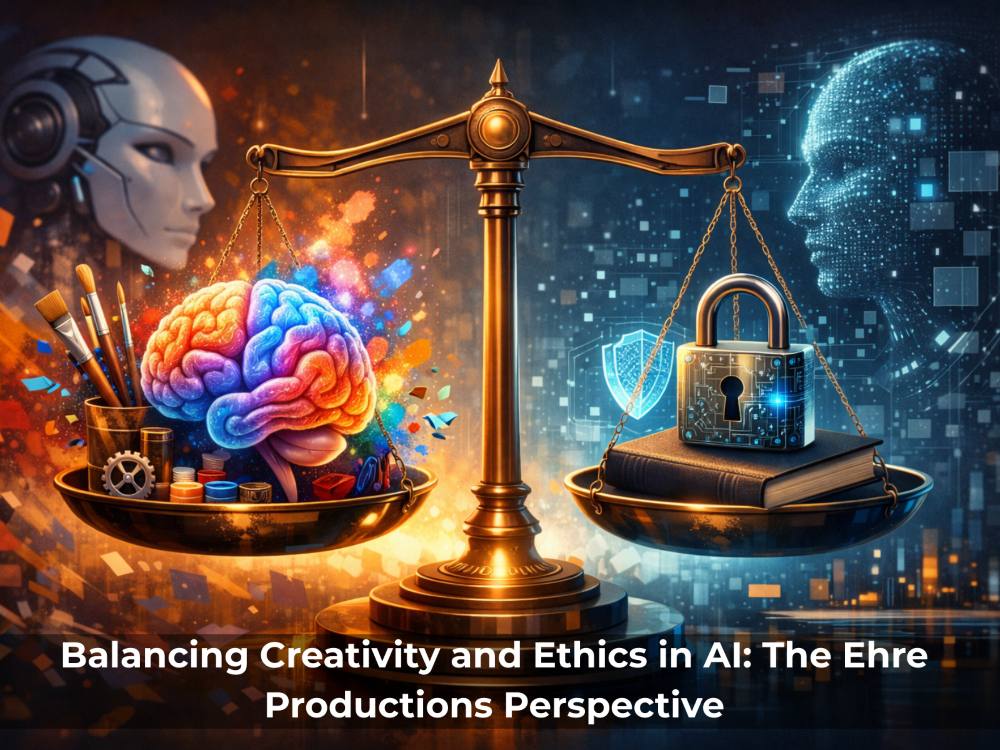
Balancing Creativity and Ethics in AI: The Ehre Productions Perspective
Let’s be honest. AI is everywhere now.
It writes. It edits. It designs. It even suggests ideas before we’ve finished our morning coffee. For creative businesses, it feels exciting and slightly overwhelming at the same time. The real question is not whether we should use AI, but how we use it.
At ehre productions, the conversation is not about replacing creativity. It is about supporting it. The heart of balancing creativity and ethics in AI is simple: use the technology responsibly, but never let it take over the human voice.
AI Is a Tool, Not the Storyteller
There is a misconception that AI creates ideas on its own. It doesn’t. It responds to direction. It works within boundaries. It reflects the quality of the instruction it receives.
That is why the prompt matters so much.
The right prompt is the secret recipe. It defines tone. It sets context. It clarifies the audience. Without clarity, AI produces generic material. With clear guidance, it can assist in producing structured drafts and creative starting points that actually support a vision.
Quality content depends on intentional prompting. Creative content depends on thoughtful direction. The tool does not decide the message. People do.
This understanding sits at the core of balancing creativity and ethics in AI.
The Role of AI in Everyday Workflow
In practical terms, AI helps in several areas of production:
- It assists with editing suggestions, speeding up rough cuts.
- It provides fast and accurate transcription of interviews.
- It supports early-stage concept research by gathering references and insights efficiently.
These tasks save time. They reduce manual workload. They improve workflow efficiency.
But they do not replace creative thinking.
By allowing AI to handle repetitive processes, the team gains more time to refine storytelling, visual identity and client strategy. Efficiency becomes a support system, not a shortcut.
How Ehre Productions Balances AI Efficiency with Creative Integrity?
This balance is intentional.
AI is used for workflow efficiency, but creative direction remains fully human-led. Scripts are reviewed. Emotional pacing is adjusted by people who understand feelings.
Human judgement decides what feels authentic. It decides what aligns with a brand’s values. It decides when something sounds right and when it does not.
Balancing creativity and ethics in AI means drawing a clear line. AI can assist with structure and speed, but creative ownership remains with the team.
Every project still begins with human intention. Every final piece carries human responsibility.
Moreover, Ehre Productions extends its expertise into IT consultancy and digital marketing through its in-house brand, Zak Solutions.
Why Does This Balance Matters?
The future of content creation will involve AI. That much is certain.
The difference will lie in how businesses choose to use it.
Those who rely entirely on automation risk losing originality. Those who reject technology altogether risk falling behind. The sustainable path sits in between.
Balancing creativity and ethics in AI ensures that innovation and integrity move forward together.
Conclusion
AI will continue to evolve. Tools will become faster and more advanced. But storytelling has always been, and will always remain, human at its core.
At ehre productions, AI improves workflow, supports research and enhances production efficiency.
That is the real meaning of balancing creativity and ethics in AI. Technology is powerful. But creativity, guided by integrity, is what makes content truly meaningful.